
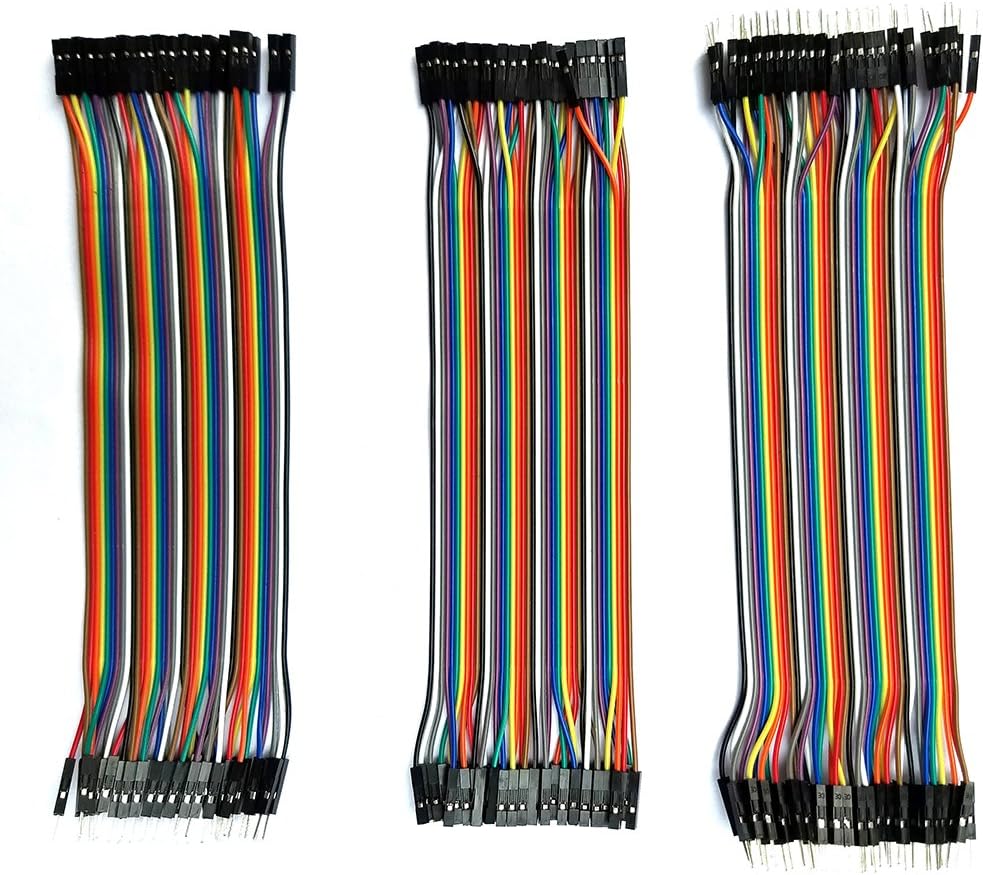
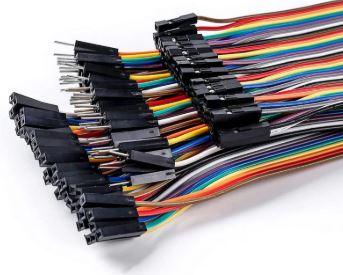
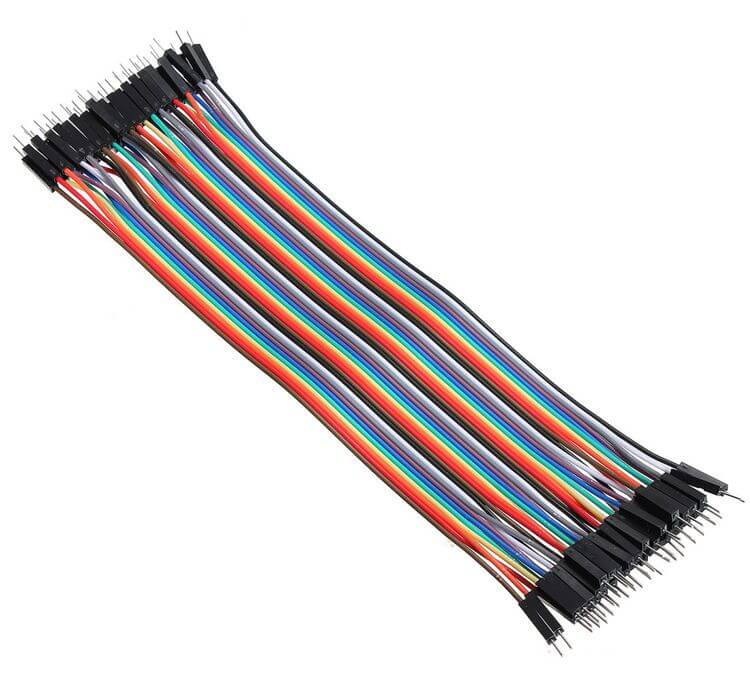
Jumper wires (also known as DuPont wires)
Jumper (DuPont) wires are 2.54 mm pitch, low-current (1–3A) insulated copper wires with pre-crimped male/female connectors, widely used for quick, solderless connections in electronic prototyping.
🔷 Overview
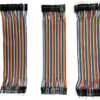
Jumper wires (DuPont wires) are pre-crimped electrical wires with connectors on each end, used to quickly connect components on breadboards, microcontrollers (like Arduino/ESP32), and modules without soldering.
🔌 Connector Types
Jumper wires come in three main connector configurations:
Male-to-Male (M-M) – both ends have pins (used for breadboards)
Male-to-Female (M-F) – one pin, one socket (used to connect modules to headers)
Female-to-Female (F-F) – both ends sockets (used between header pins)
Connector Pitch: 2.54 mm (0.1 inch standard spacing)
Connector Type: DuPont crimp terminals with plastic housing
⚙️ Electrical Specifications
Rated Voltage: typically up to 300V (varies by manufacturer)
Rated Current: ~1A to 3A (depends on wire gauge and quality)
Contact Resistance: ≤ 20 mΩ (typical)
Insulation Resistance: ≥ 100 MΩ
🧵 Wire Specifications
Wire Gauge (AWG):
Common: 22 AWG, 24 AWG, 26 AWG, 28 AWG
Most typical in kits: 26–28 AWG
Conductor Material:
Stranded copper (most common)
Sometimes tinned copper for corrosion resistance
Insulation Material:
PVC (Polyvinyl Chloride)
Outer Diameter: ~1.2 mm (varies with AWG)
📏 Physical Specifications
Length Options:
10 cm, 20 cm, 30 cm (common)
Breadboard kits often include mixed lengths (e.g., 10–40 cm)
Color Coding:
Multi-color sets (red, black, yellow, green, blue, white, etc.)
Used for easy identification of connections
Connector Housing:
Single-pin or multi-pin (1×1, 1×2, 1×4, etc.)
Detachable ribbon-style wires (can be separated)
🔧 Mechanical Characteristics
Flexibility: High (due to stranded wire)
Durability: Moderate (connectors can loosen with heavy use)
Insertion Force: Low (designed for breadboards and headers)
🔗 Compatibility
Works with:
Breadboards
Arduino boards (e.g., Uno, Mega)
ESP32 / ESP8266
Raspberry Pi GPIO
Sensor modules and ICs with 2.54 mm headers
⚡ Performance Notes
Not ideal for:
High current applications (>3A)
High-frequency or RF circuits
Permanent installations
Best for:
Prototyping
Testing circuits
Educational use
Reviews
There are no reviews yet.