
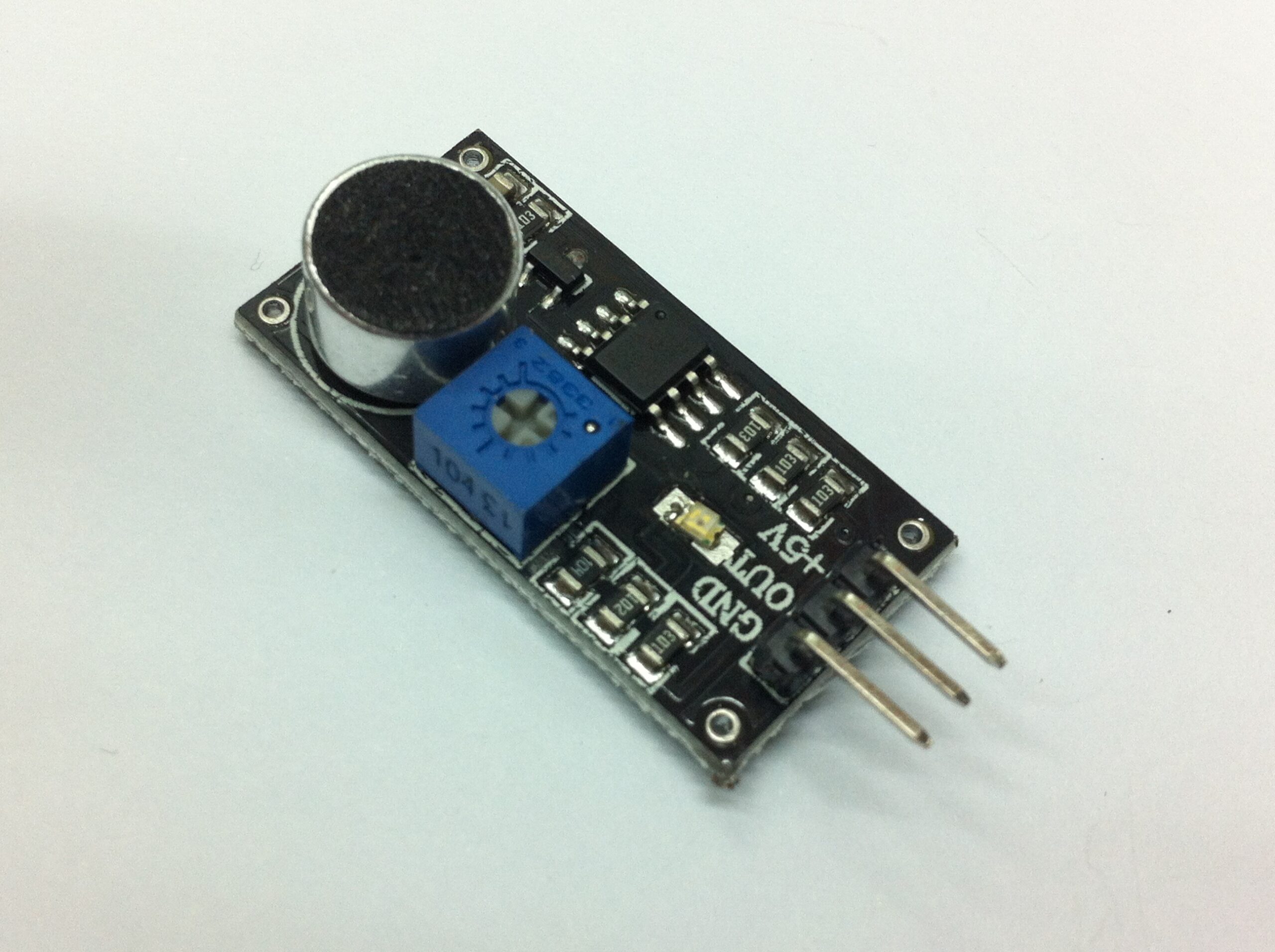
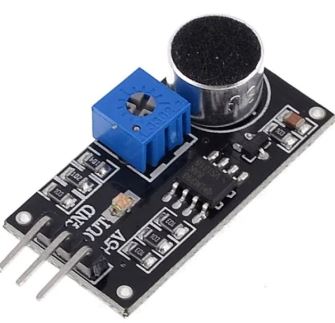
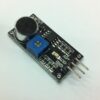
Sound Detection Sensor Module LM393
The Sound Detection Sensor Module is a simple microphone-based sensor with adjustable sensitivity that provides digital and analog outputs for detecting sound events, making it ideal for basic audio-triggered and noise-sensing applications in Arduino and IoT projects.
🔊 Sound Detection Sensor Module
🧠 Main Components
Microphone Type: Electret condenser microphone
Comparator IC: LM393 voltage comparator IC (commonly used)
Amplifier Circuit: Built-in signal amplification stage
⚡ Electrical Characteristics
Operating Voltage: 3.3V – 5V
Current Consumption: ~4–10 mA
Output Type: Digital + Analog (depends on module)
🔌 Pin Configuration
Typical 3-pin or 4-pin layout:
3-Pin Version
VCC: Power supply (3.3V–5V)
GND: Ground
DO (Digital Output): HIGH/LOW signal when sound threshold is reached
4-Pin Version
VCC: Power supply
GND: Ground
DO: Digital output (threshold trigger)
AO: Analog output (sound intensity signal)
📡 Output Features
Digital Output (DO):
HIGH or LOW depending on sound level
Adjustable threshold via potentiometer
Analog Output (AO):
Continuous voltage proportional to sound intensity
Used for measuring sound level (not calibrated in dB)
🎚️ Sensitivity Control
Potentiometer (Trimmer):
Adjusts detection threshold
Clockwise → more sensitive (detects quieter sounds)
💡 Indicators
Power LED: Indicates module is powered
Signal LED: Lights up when sound exceeds threshold
🔊 Detection Characteristics
Sound Type: Clap, knock, voice, or general noise
Frequency Range: Typically ~50 Hz – 20 kHz (depends on mic)
Detection Range: ~0.5 to 3 meters (environment-dependent)
Response Time: Fast (real-time detection)
⚙️ Working Principle
Microphone converts sound waves into electrical signals
Signal is amplified
Comparator compares signal with set threshold
Outputs:
Digital trigger (ON/OFF)
Analog voltage (sound level)
📐 Physical Characteristics
Module Size: ~32 mm × 17 mm (varies by model)
Mounting Hole: Usually 1 hole
Form Factor: Breadboard-friendly
🔧 Additional Features
Adjustable sensitivity
Compatible with 3.3V and 5V microcontrollers
Simple interface (no complex calibration required)
🧪 Typical Applications
Clap switch (turn lights ON/OFF)
Noise detection systems
Sound-activated alarms
Voice-triggered devices
Robotics (sound response behavior)
⚠️ Limitations
Not accurate for measuring sound in decibels (dB)
Sensitive to environmental noise
Requires calibration for stable performance
Limited range and precision
Reviews
There are no reviews yet.